Instituto de Ingeniería · Venezuela · Online talk

Bringing science
closer.

· Add to calendar ↓ · Join: FORMATEC virtual rooms ↗ · room to be confirmed

From open data to shared knowledge: computing, automation and artificial intelligence for research and education.

Arturo Sánchez PinedaPhysics · Infrastructure · Open education
CERN / ATLAS · INAIT · Creative Commons

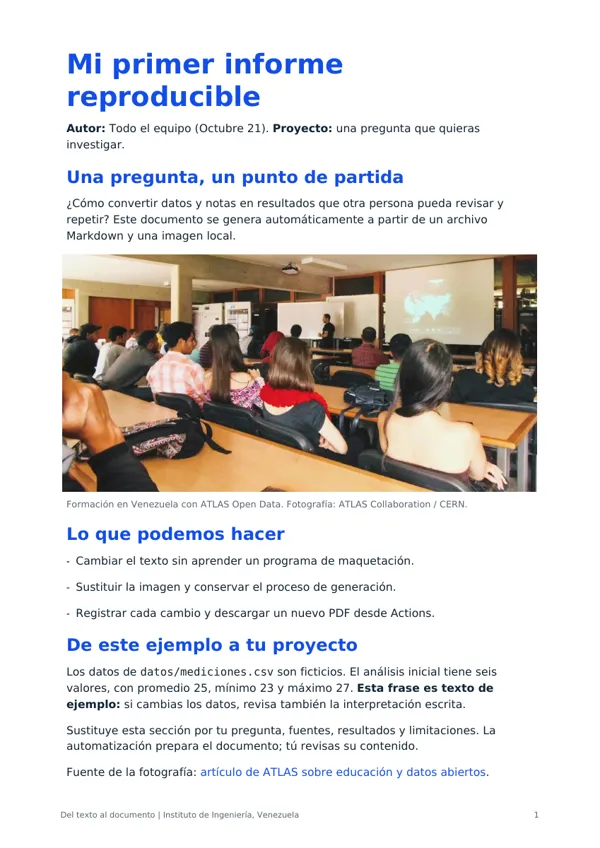
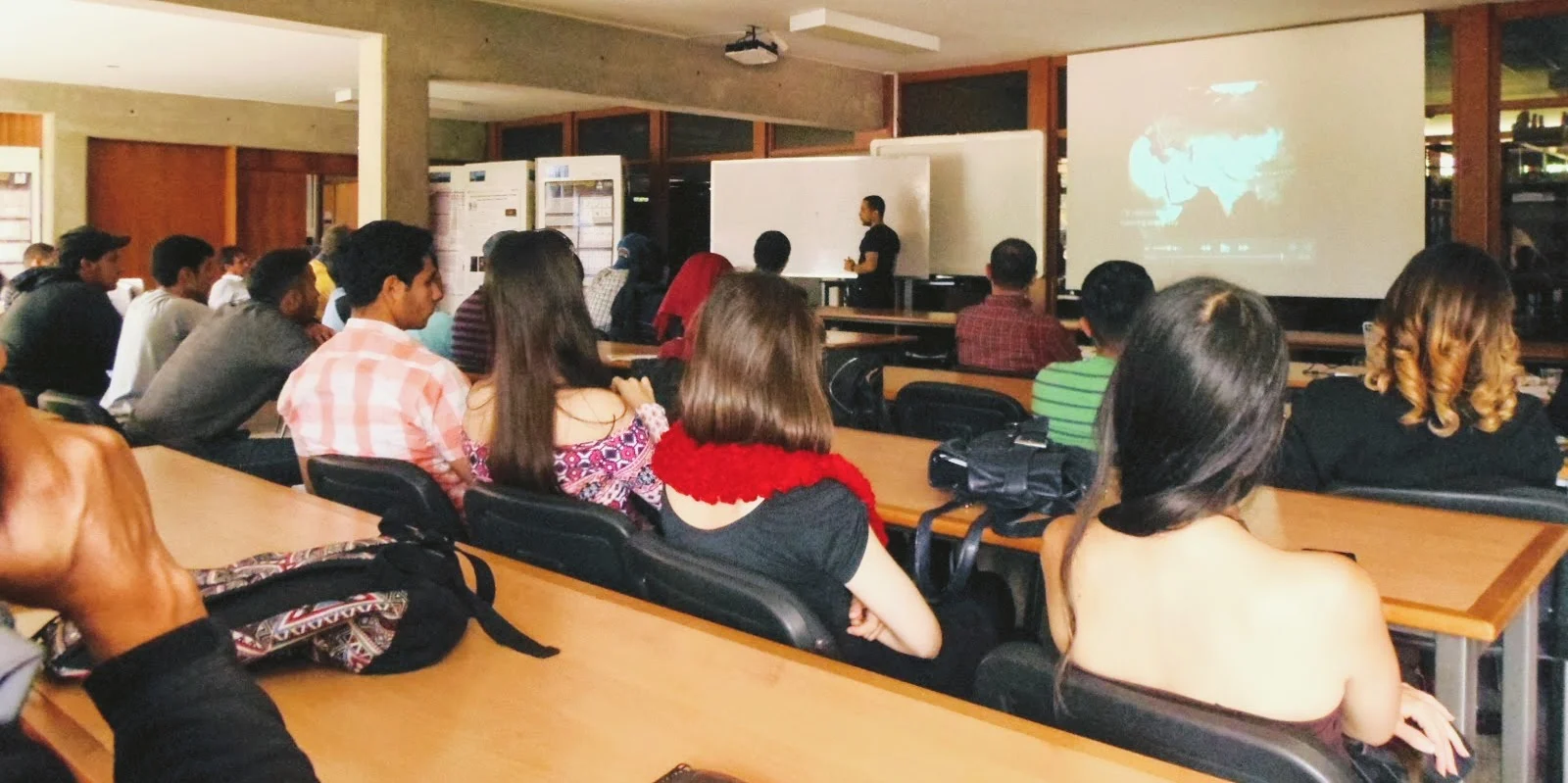
Arturo teaching at an ATLAS Open Data educational event in Venezuela.Knowledge across borders
Educational activity in Venezuela. Photograph: ATLAS Collaboration / CERN. Source ↗
01 / The talk

Infrastructure
within people’s reach.

Research and teaching involve much more than data analysis: setting up an environment, writing scripts, organising files, recording decisions and keeping charts, reports and learning materials up to date. This talk connects those tasks in a simple process so that more time can go into asking questions and interpreting results.

Participants will explore how Git and GitHub preserve versions of code, data and documents, how Python scripts make an analysis repeatable, and how GitHub Actions automates routine work. Changing the data can produce a new chart; changing Markdown text or an image can generate a new PDF. Each result is associated with the version of the files that produced it.

This presentation repository is also the practical material participants can clone or fork into their own account. Simple folders for data, examples, images and exercises support three guided activities: analyse a CSV, create a chart and generate a PDF from Markdown and images. Begin by changing a value, title or photograph, then adapt the example to a thesis, class or community project.

The talk also considers notebooks, research notes and language models as tools for understanding code, preparing scripts and documenting work while checking the results. The aim is to use available resources thoughtfully, recognise recurring tasks across projects and turn a particular solution into a starting point others can reuse. If you can and would like to, create your GitHub account before the talk.

Making a tool available is a beginning. Being able to use it, understand it and share its results is what builds capacity.
Your first result

What you can make
in ten minutes

Example data: six values, mean 25, minimum 23 and maximum 27. Change a 24 to a 30 and check that the mean becomes 26.

Bar chart showing the six sample CSV values.
A reproducible chart from your CSV.
Preview of the PDF generated from Markdown and an ATLAS/CERN-credited photograph.
Your text and image, turned into a PDF.
02 / Practical experiences

From a thesis
to a community.

Particle data, simulations, health, maps and education. Each project opens a door to the materials, code or experience that made it possible.

ATLAS Open Data education in Venezuela.
Physics · Theses · Open data

ATLAS Open Data

Experimental data, software, documentation and mentoring that enable university research and learning from Venezuela. Theses by Iskya, María and Oscar connect these tools with projects at UCV and ULA.

What this project contributes

Iskya García completed her master’s work at UCV under Arturo’s supervision, studying dark-matter candidates with ATLAS open data and simulations. María Di Domenico completed her undergraduate thesis at UCV by reconstructing W, Z and Higgs boson masses using ROOT, Jupyter and SWAN. Their work also became reusable educational material. Oscar Alejandro Altuve Pabon (ULA) defended his undergraduate thesis on 1 February 2022, supervised by Arturo Sánchez and Alberto Patiño. He studied optimisation of Higgs analysis in the H → ZZ* → 4ℓ channel at 13 TeV using ATLAS Open Data, ROOT/C++ and Jupyter. A virtual machine supported local analysis with reduced reliance on internet connectivity. The material is preserved in Zenodo, with a link to its code.

ATLAS Collaboration / CERN.

CHEP 2018 · CHEP 2021 · Educational infrastructure

From a USB drive to shared infrastructure

Bringing infrastructure closer to students is a long-standing line of work: provide ready-to-use environments that institutions can adapt to their resources.

What this project contributes

At CHEP 2018, Arturo presented ATLAS Open Data and Open Key: data, software, notebooks and documentation carried on a USB drive, with virtual machines for places with limited connectivity. The slides show applications in training and theses in Venezuela. In 2021, Arturo Sánchez Pineda and Giovanni Guerrieri published a proposal for multi-user deployment with JupyterHub and infrastructure as code. It documents an initial Terraform and OpenStack proof of concept at CERN; other scenarios remain proposals. The practical lesson for this talk: delivering a reproducible environment reduces the setup work each student must repeat.

Open data · Teams · Mentoring

CoAfina Hackathon

Students from different countries and disciplines work on open-data challenges with mentors and a wider learning community.

What this project contributes

Co-organised from its beginnings, CoAfina combines collaborative work, repositories, documentation and public demonstrations. An intensive event becomes reusable projects and relationships that continue afterwards. Creative Commons Venezuela, LA-CoNGA Physics, RedCLARA and CEDIA have contributed to this experience.

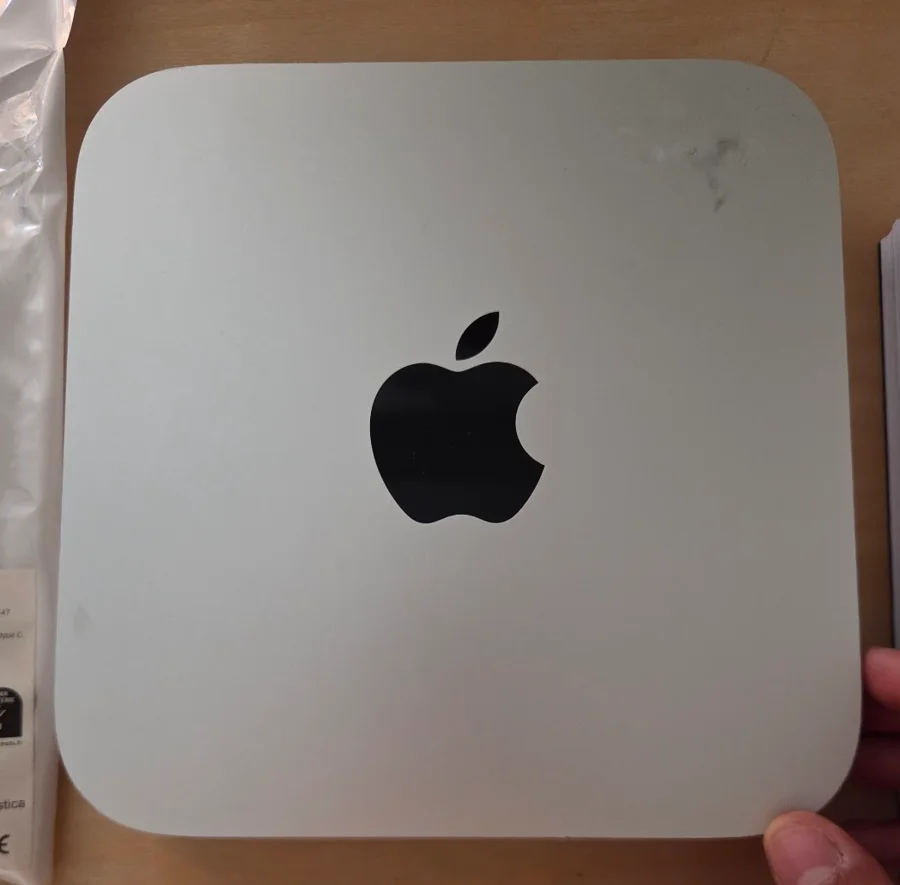
A Mac mini considered in the LAGO Venezuela computing proposal.Pilot proposal
Infrastructure · Venezuela

LAGO Mérida

Repurposing available computers as shared resources for students and researchers: submit a job and retrieve reproducible results.

What this project contributes

The proposal describes remote computing with automated workflows returning plots, reports and execution records. It is a bounded service for teaching and modest workloads, with clear responsibilities for access, preservation and data publication. It explores how existing equipment can expand local capabilities.

Hardware documented in the LAGO Venezuela proposal materials.

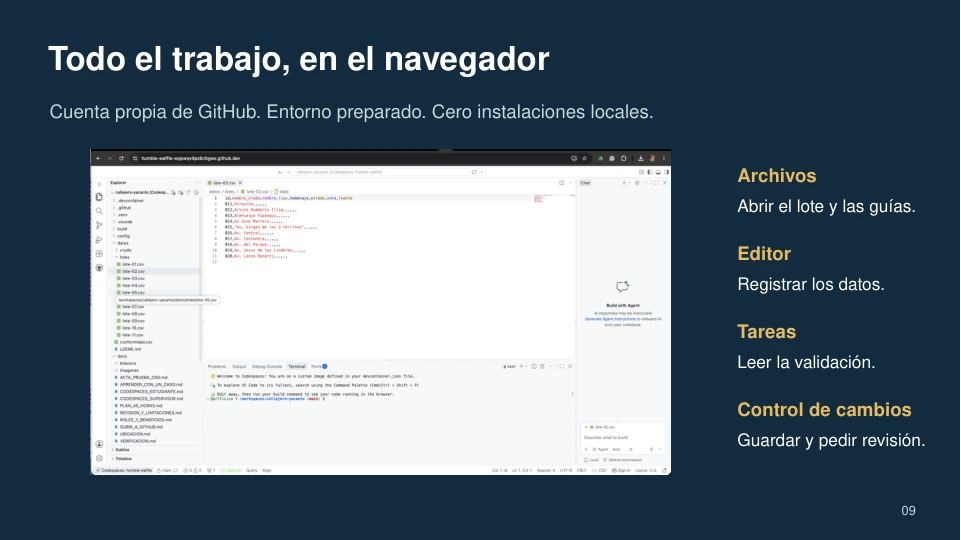
Teaching material showing browser-based files, editing, tasks and version control for the street inventory.
Los Topos Cósmicos · Local data

Villa Yacanto Street Inventory

A community problem becomes an opportunity to examine sources, document uncertainty and propose traceable changes.

What this project contributes

The workflow uses GitHub and Codespaces to review a street inventory. Contributions receive automated checks and human review. Students learn to explain a decision and preserve its supporting evidence; technical validation and municipal decisions have distinct responsibilities.

Teaching material by Arturo Sánchez Pineda / Los Topos Cósmicos. Spanish original.

Los Topos Cósmicos · Simulation

Beam4School

Experimental proposals, configurable simulations and documentation in a shared project students can explore and improve.

What this project contributes

The aim is an approachable entry point to demanding scientific tools. Students connect their parameter choices to the results and document their reasoning, progressively learning the computing that supports the experiment.

A view of the Civilian Geopolitical Reality Map project.
Sources · Civic analysis · Publishing

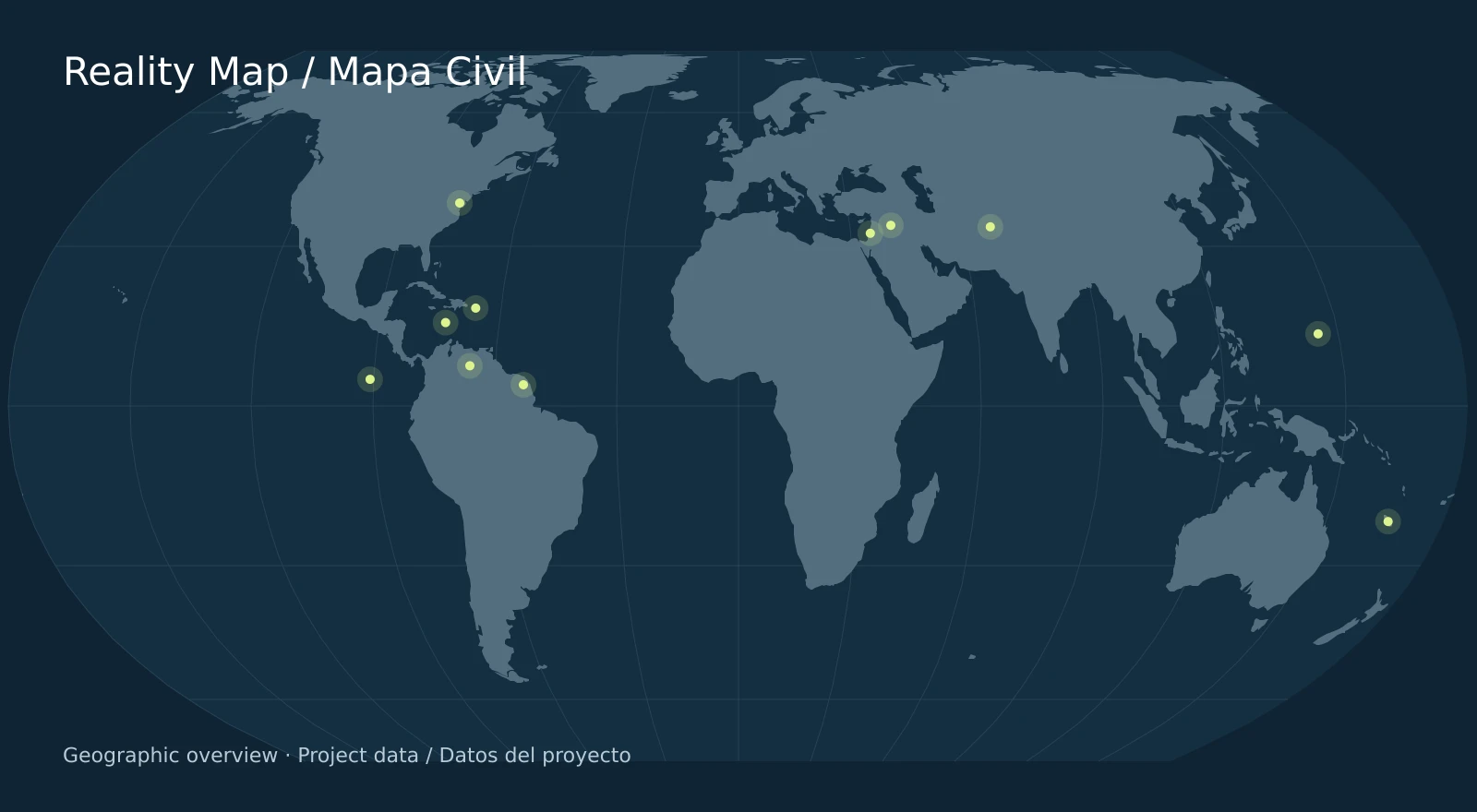
Reality Map / Mapa Civil

A bilingual project examining geopolitical issues through studies, sources and a claim ledger that readers can inspect.

What this project contributes

The method distinguishes documented events, court decisions, findings, official positions, inferences and forecasts. Versioned documentation, checks and static publishing bring reproducibility practices into civic analysis. AI tools can assist; classification and review remain human responsibilities.

Reality Map visualisation; geography and locations drawn from its repository.

Schools · Scientific software

SILAFAE and CSC Chile

Programming, version control, testing, documentation, debugging and performance connected through practical exercises.

What this project contributes

Learning progresses from obtaining a correct result to collaborating on its development and improving its execution. Materials from SILAFAE and the CERN School of Computing in Chile can be reused in other courses, theses and research projects.

Creative Commons Venezuela · Health

Open knowledge in action

Organising communities to turn scientific evidence into public, reusable knowledge, with sources and authorship acknowledged.

What this project contributes

Creative Commons Venezuela has supported partnerships, hackathons and editathons. Health for All, developed with WHO, Cornell and open-knowledge communities, brought experts and volunteers together to work on Wikipedia. The experience resulted in a scientific publication in 2026.

Cooperation · Regional education

CEVALE2VE and LA-CoNGA

Cooperation among researchers, educators and institutions to bring training and educational resources to Latin American students.

What this project contributes

These experiences help examine how courses, projects and academic relationships can be sustained across countries. Their value lies in connecting infrastructure, materials and human support so knowledge can circulate and endure.

03 / A method others can adapt

Solve a problem.
Share what you learn.

A thesis, a municipal inventory and a health project share needs for data, organisation, computing, review and communication.

01

Organise

Git preserves history; tasks, notes and sources explain the decisions.

02

Run

Jupyter and prepared environments connect reasoning with code and data.

03

Check

Tests and human review help detect errors and discuss results.

04

Share

Reports, documents and teaching materials remain connected to their evidence.

Automation makes it possible to run analyses, check changes and produce reports consistently. Notes, scripts, data and documents remain connected to the decisions behind each result.

The connecting principle is generalising solutions: identifying shared needs and developing methods other groups can adapt. This vision informs contributions to LAA-HECAP and LASF4RI, particularly the proposal for transversal computing strategies and services for research and training.

04 / Resources and artificial intelligence

Use what is available.
Keep your judgement.

Understand free and educational resources, their conditions and how they can strengthen your own capabilities.

The talk examines platforms such as GitHub, part of Microsoft, alongside open tools and academic infrastructure. The approach is practical and critical: understand what they offer, under which conditions, and how to keep work documented and portable to other environments.

Language models can help explain code, draft scripts, propose tests, improve documentation, adapt teaching materials and support reading. Their usefulness depends on defining tasks clearly, checking sources and validating results. Reasoning, authorship and validation remain people’s responsibilities.

Automate with Actions

Standard GitHub-hosted runners are free for public repositories; storage and other services have their own limits.

GitHub Actions conditions ↗

Work with Codespaces

Prepared browser-based environments, with included quotas for personal accounts and conditions depending on the plan.

Check the quotas ↗

The talk is for students, educators, researchers and people developing scientific, educational or community projects. It offers examples and methods adaptable in Venezuela and the region: turning available resources into the autonomy to learn, investigate and produce shared knowledge.

05 / About the speaker

A career across science,
infrastructure and education.

Arturo Sánchez Pineda is a Venezuelan physicist, infrastructure engineering professional and educator. His education began at Universidad de Los Andes in Mérida, where he pursued Physics and Engineering studies and graduated in Physics with Magna Cum Laude honours. He continued his research training at LPNHE, Université Paris-Diderot, through the HELEN programme, and earned his PhD in High Energy Physics at the University of Naples Federico II in 2013. His doctoral research focused on Higgs-boson searches with ATLAS. Academic background.

His scientific career includes research and computing responsibilities in Naples and INFN, postdoctoral work associated with ICTP, the University of Udine and INFN, and scientific-infrastructure development at LAPP within the European ESCAPE project. He has worked on particle-physics data analysis, scientific software, distributed processing and tools that support other researchers.

He was a member of the ATLAS Collaboration during the discovery of the Higgs boson in 2012. The discovery by ATLAS and CMS experimentally confirmed the theoretical mechanism recognised by the 2013 Nobel Prize in Physics awarded to François Englert and Peter Higgs. The subsequent joint Higgs-mass paper, published in 2015 with 5,154 contributors, was recognised by Guinness World Records for its number of contributors. Nobel Prize · Guinness record.

He served as a system administrator for ATLAS’s Trigger and Data Acquisition infrastructure at CERN, within the small specialist team maintaining systems essential to the experiment. This responsibility connected the perspective of a researcher analysing data with that of the professional maintaining the infrastructure that makes the analysis possible.

As co-founder and coordinator of ATLAS Open Data, he helped bring data, software, documentation and training to students and educators outside the collaboration. His educational work includes university teaching, thesis supervision and mentoring at undergraduate and master’s levels, student training and lecturing at international schools, including the CERN School of Computing in Chile. ATLAS profile.

He is a co-founder of CEVALE2VE and Creative Commons Venezuela, representing the chapter and supporting education and open-knowledge initiatives. He has contributed to LA-CoNGA Physics, co-organises CoAfina and participates in LAA-HECAP and LASF4RI efforts to strengthen regional education and scientific infrastructure. His work combines community coordination, mentoring, open licensing, documentation and collaborative resource development. Creative Commons profile.

He currently leads Infrastructure and IT Operations at INAIT, a Swiss AI company, working on cloud computing, automation, security, operational continuity and resource management. He continues producing scientific and educational work through publications, projects, teaching and international collaboration. His first-authored 2026 paper on Health for All, with WHO and Cornell collaborators and an INAIT affiliation, provides a concrete example of this continuity between industry, research and open knowledge. Publication.

The connecting thread in his career is turning specialised technical experience into tools and opportunities others can use: bringing infrastructure closer to students and researchers, automating repetitive work, and developing reusable solutions that preserve scientific rigour and are straightforward to adopt.